Trading Desk: Incremental Revenue from Inactive Customers
How to build data-driven offers and route execution to the right branch without pulling sales teams away from active accounts.
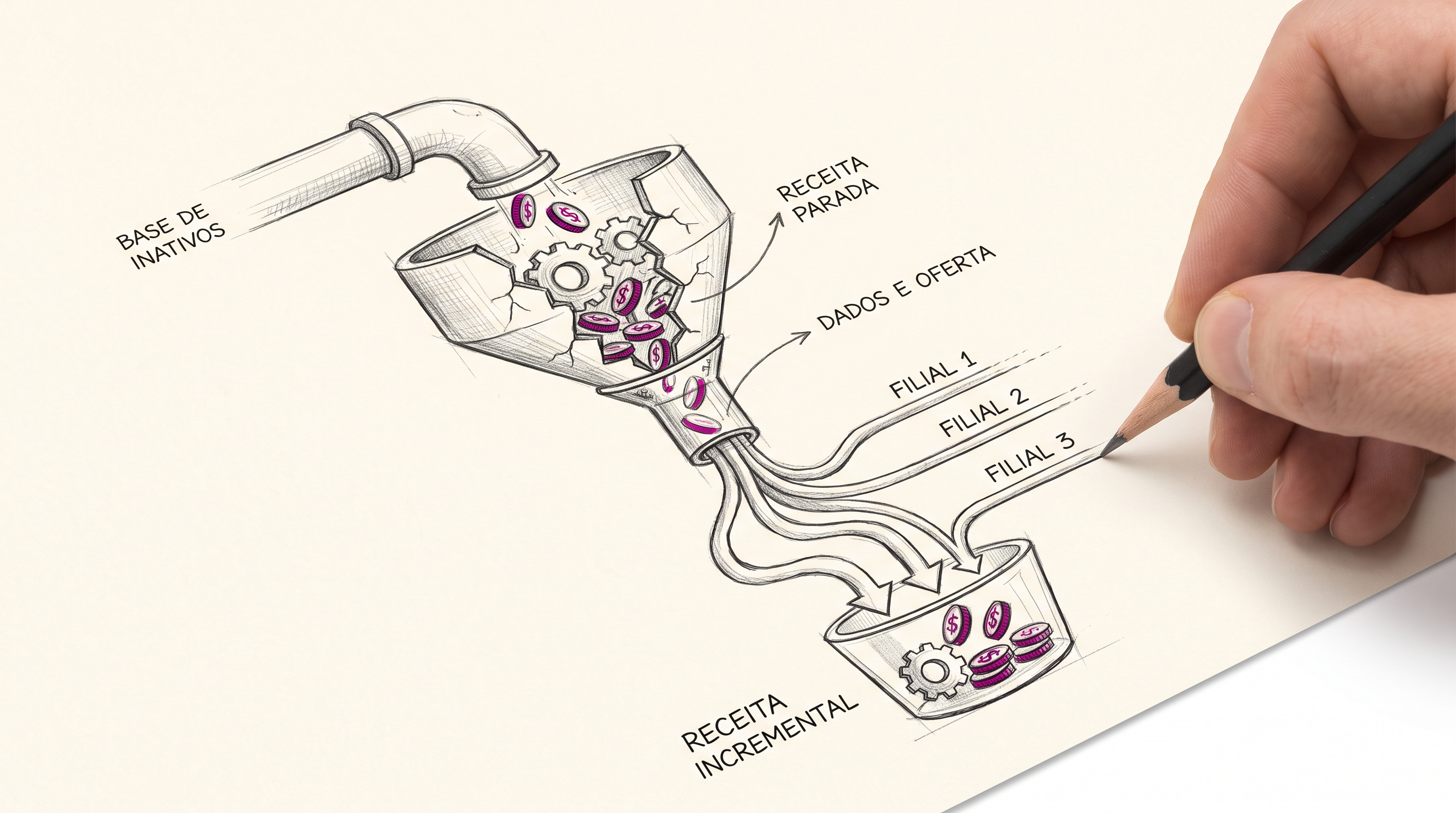
The Incremental Revenue Sitting Idle in Your Dormant Customer Base
Your company has already acquired customers, booked orders, and built commercial relationships. But some of those customers have stopped buying. While the sales team focuses on current targets, these accounts remain dormant—even when existing data could guide a new approach.
The tension for sales leaders is clear: reactivating dormant accounts can generate incremental revenue, but pulling sales reps into broad outreach campaigns can also compromise service for active accounts. If the initiative fails to account for pricing, inventory, account-specific terms, and each branch’s fulfillment capacity, it will create more work than orders.
The thesis of this article is that a Trading Desk can unlock this revenue stream without distracting the sales team from its core responsibilities. This function identifies dormant customers, develops offers based on available data, and routes each opportunity to the branch responsible for execution. The goal is not to replace the local sales relationship, but to improve the next commercial decision.
TL;DR
- A dormant customer base is an existing asset, but reactivation should not depend on generic campaigns or sales reps’ memory.
- A Trading Desk separates opportunity identification and preparation from execution by the local branch.
- Before automating offers, the company must establish governance for customer identity, pricing, inventory, commercial terms, and service ownership.
- Success should be measured as incremental revenue delivered with operational consistency—not simply by the volume of outreach.
How Can You Reactivate Customers Without Pulling the Sales Team Away From Current Revenue?
The first step is recognizing that inactivity alone is not enough information to approach a customer.
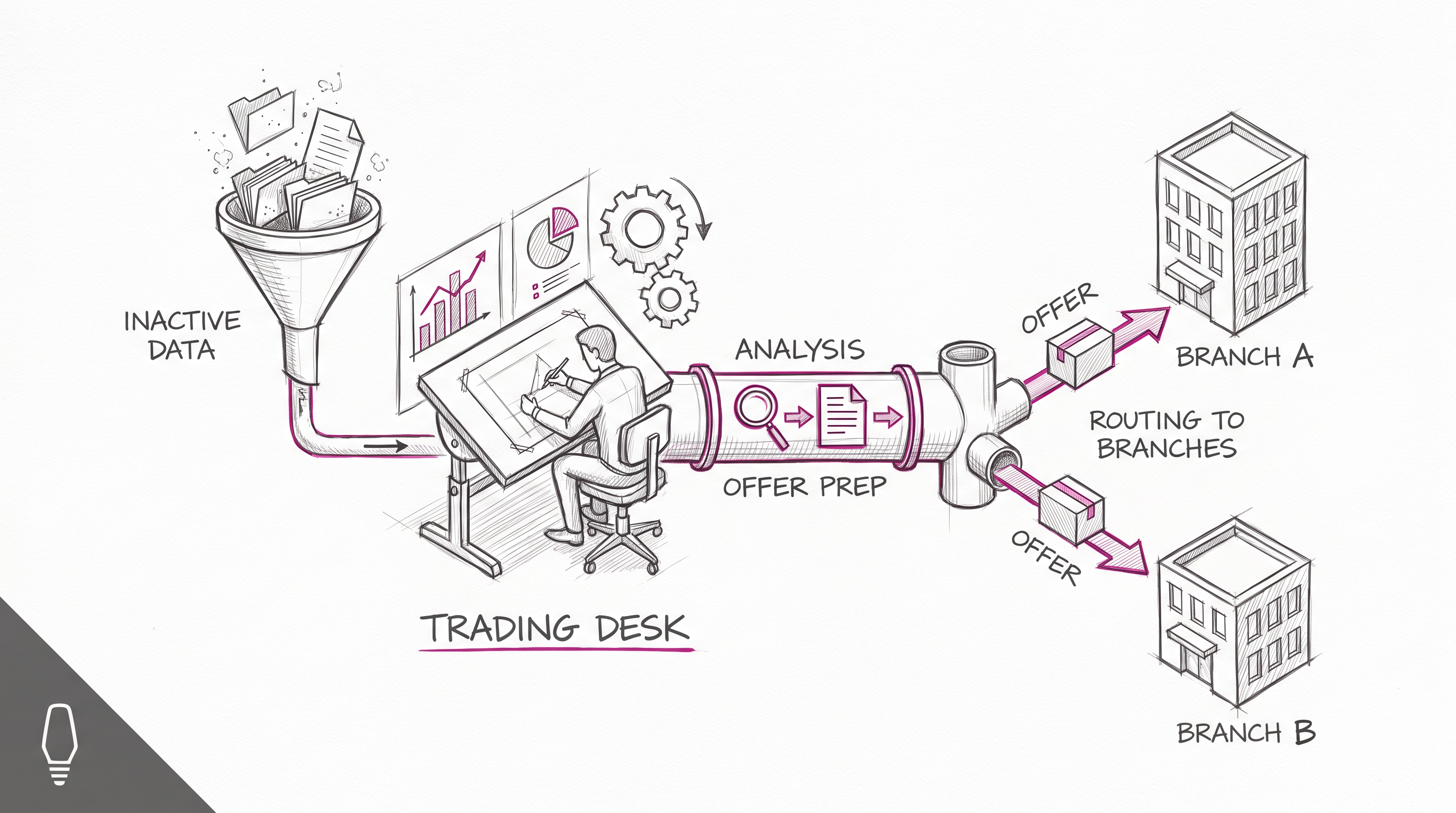
A list of companies with no recent orders only tells you where to look. It does not explain what to offer, under which terms, with what availability, or through which branch. Without that context, reactivation tends to become a generic campaign. The company increases outreach volume but leaves each sales rep to reconstruct the opportunity from scratch.
That model does not create a new revenue stream. It simply adds another queue to the existing sales process.
A Trading Desk uses a different division of labor. Customer-base analysis and offer preparation are centralized, while opportunity ownership and execution remain with the appropriate branch. Local teams do not have to manually identify customers who stopped buying or begin every conversation without context. Instead, they receive a commercially qualified opportunity that is better prepared for decision and execution.
The Problem Is Not Finding Names in the CRM
In many B2B organizations, the account names are already available. The challenge is turning historical records into a commercially valid offer today.
To do that, the organization must answer objective questions:
- Has the customer been correctly identified across systems?
- Which branch or business unit owns the account?
- Is the product available for that location to sell and fulfill?
- Which approved price applies?
- Are there account-, region-, or channel-specific terms?
- Who is authorized to approve an exception?
- How will the order return to the branch’s standard workflow?
Supporting material LI-045 helps explain why this step is critical. According to its published thesis, when pricing, payment terms, discounts, and customer segmentation live outside core systems, campaigns and AI agents cannot operate consistently. The customer journey depends on authenticated identity, approved pricing, real inventory, and traceability.
This changes the diagnosis. If every reactivation offer requires a sales rep to check spreadsheets, confirm inventory, chase approvals through email or text messages, and recalculate pricing, the problem is not campaign quality. It is the lack of structured commercial decisions.
Centralizing Intelligence Does Not Mean Centralizing the Sale
A branch-based organization may resist centralized initiatives when they appear to compete for customers, revenue credit, or local autonomy. For that reason, opportunity routing is not an operational detail. It is part of the governance model.
The Trading Desk identifies the opportunity and structures the offer, then routes it to the branch responsible for the account. The local team remains responsible for the relationship and for execution within its authority. The centralized function does not take ownership of the book of business. It reduces the work required for the branch to make that book productive again.
The public LI-042 case provides a relevant architectural reference. The operation described had 40 business units, different ERP systems, and branch-specific commercial terms. The company addressed the issue by implementing an orchestration layer above its local systems rather than replacing them. Pricing, credit, and catalog rules became centrally governed, while each ERP remained the system of record for its business unit.
The same principle applies to dormant-account reactivation: intelligence can be shared, but each part of the organization should receive only what its operating context allows. This preserves local autonomy where it matters while reducing inconsistency across branches.
The Offer Must Be Executable From the Start
A data-driven offer is more than a product recommendation. It must reach the organization in a form that can actually be executed.
If a customer receives a proposal that does not match approved pricing, available inventory, or the terms recognized by the branch, the reactivation effort begins by creating distrust. The sales rep must correct the offer, explain the discrepancy, and restart the negotiation.
Governance must therefore come before automation. AI can help analyze the customer base, identify patterns, and prepare alternatives, but it must operate on documented commercial rules. Automating before defining those rules only accelerates the creation of exceptions.
It is also important to distinguish activity from results. A Trading Desk should not be evaluated only by the number of customers selected or offers sent. Management must track the entire path:
- the customer base deemed eligible;
- offers prepared according to current rules;
- opportunities accepted or declined;
- orders actually placed;
- the branch responsible for execution;
- margins and terms applied;
- exceptions and reasons opportunities were blocked.
This end-to-end view shows whether the revenue is truly incremental and identifies the specific decision point where an opportunity is getting stuck.
The Cost of Inaction
Leaving dormant accounts untouched may not appear to create an immediate expense. In practice, however, the company is holding a commercial asset without a clear process for using it.
The costs appear in less visible ways:
- Sales reps spend time reconstructing context that existing data could organize.
- Each branch approaches dormant accounts using its own criteria.
- Campaigns generate leads that local teams cannot immediately execute.
- Opportunities depend on the memory of whoever knows the account.
- Leadership cannot distinguish a lack of demand from failures in pricing, inventory, terms, or routing.
- Automation remains limited because commercial decisions are not structured.
The consequence is not limited to missed revenue. The company also loses the ability to learn systematically from its own customer base. Without recording why an offer was accepted, declined, or blocked, every new attempt starts from nearly the same point.
Principles for Building a Dormant-Account Reactivation Trading Desk
- Define what qualifies as a dormant customer before creating any offer.
- Separate customer selection, opportunity preparation, and branch execution.
- Preserve the commercial ownership of the branch responsible for the account.
- Use only pricing, inventory, and terms recognized by the organization.
- Document approval authority and exception rules before automating decisions.
- Give sales reps actionable context, not just a list of names.
- Measure completed orders and operational consistency, not outreach alone.
- Use every customer response to improve the next decision.
- Treat AI as a tool for analysis and governed execution—not as a replacement for commercial policy.
FAQ
Does the Trading Desk Replace the Branch Sales Rep?
No. The model centralizes analysis and opportunity preparation, then routes execution to the appropriate branch. The sales rep retains the customer relationship and works from a more structured commercial context.
Is It Enough to Identify Customers Who Have Not Purchased Recently?
No. Inactivity identifies a potential audience, but each offer must account for customer identity, pricing, inventory, commercial terms, and service ownership.
Do the Branch ERP Systems Need to Be Replaced?
The LI-042 case points to another approach: an orchestration layer can centralize rules above existing ERP systems while each local system remains the business unit’s system of record.
Where Can AI Help?
AI can support customer-base analysis, opportunity identification, and offer preparation. It should operate only after deterministic rules, approval authority, and traceability requirements have been defined.
"The support model is differentiated — the project team actually understands B2B complexity and stays close throughout implementation."
Want to see this in your operation?
Real B2B operations already run on it.