B2B marketplace: Spryker or CWS Platform?
When several sellers offer the same product, the rule that picks the offer and the path to the contract become commercial policy.

Editorial note: a comparison between Spryker and CWS Platform for the B2B marketplace scenario, in which a distributor or manufacturer opens its digital channel to other sellers. Written for those who own revenue in that channel, such as the VP of Sales. Every fact about Spryker comes from its public documentation, with the address next to it.
Sales leaders at distributors that decide to open a B2B marketplace usually hear the same promise: more assortment, more sellers, more orders without adding inventory of their own. The question that gets pushed to later is less comfortable. When three sellers offer the same product to the same buyer, who decides which offer shows up? And when a seller wants to give a customer special terms, who creates that contract?
For a VP of Sales, a B2B marketplace is not a bigger catalog. It is a two-sided commercial relationship, seller and buyer, that needs a rule for competing offers and a path for contracts. Without them, the marketplace becomes a storefront with many prices and little negotiation.
This comparison looks at Spryker and CWS Platform from that angle only: how the winning offer is chosen, who opens the commercial relationship, and where the rules live. It is not a feature ranking. The broader frame of the architectures is in the post on the three B2B commerce platform models.
What Spryker does well
Spryker has a B2B marketplace model with three actors: the marketplace operator, the merchant, and the buyer, the latter structured into companies, business units, and company users. The commercial relationship between merchant and buyer has its own flow, described in Marketplace Merchant B2B Contracts and Contract Requests: the buyer submits a request from the merchant's profile page, the product page, or the company account, defining the business units involved; the merchant gets an email notification and approves or rejects it in the Merchant Portal, and can add notes to the company and internal comments for its own team. Approval creates the merchant relation automatically.
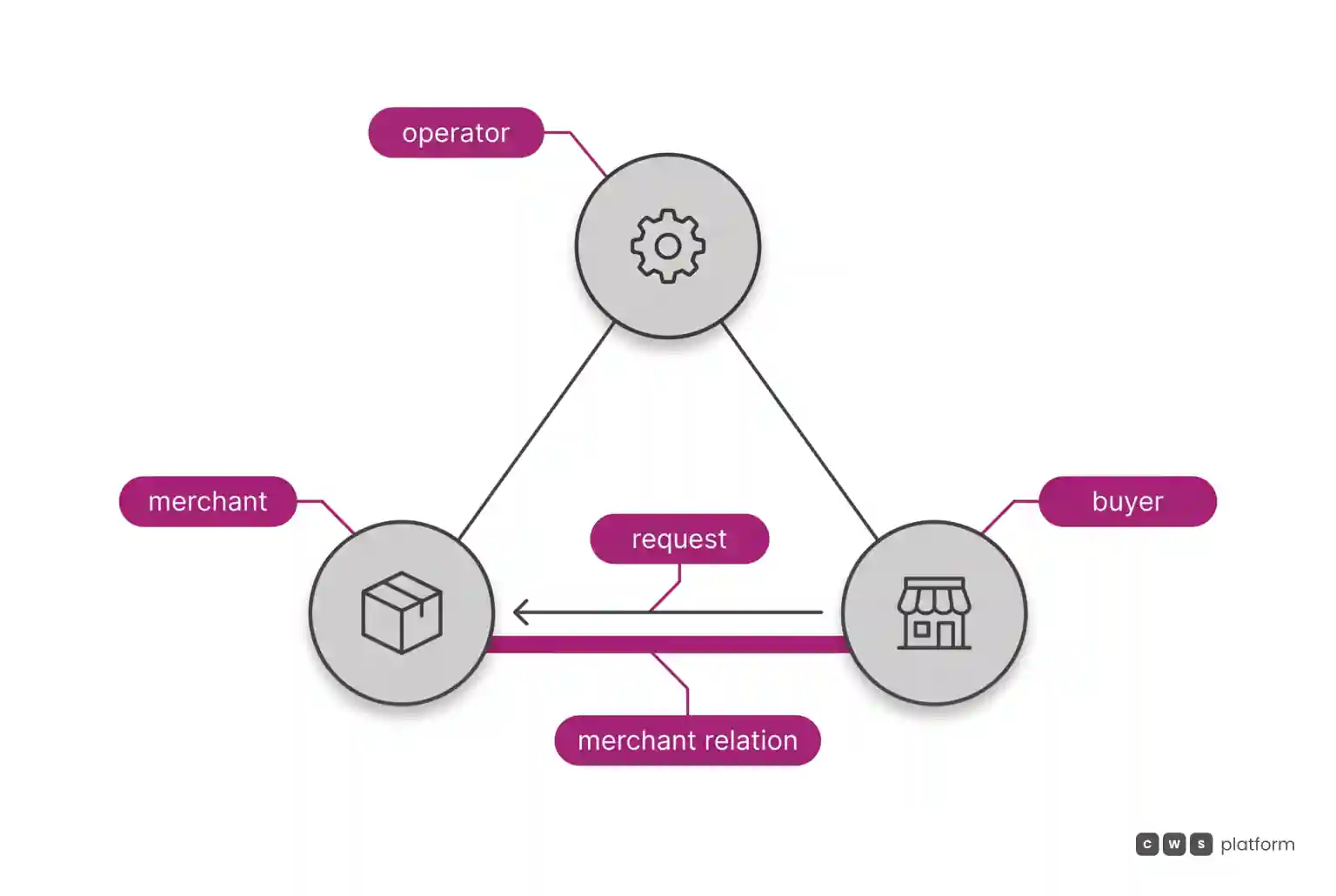
Once the relation exists, the merchant sets custom prices for that relation's audience, or uses default prices, in the Merchant Portal, as described in Marketplace Merchant Custom Prices. The buyer sees the price of their relation, or the default price if there is no specific rule.
For an operator that wants every contract to start from a formal buyer request, with the merchant's approval on record, this flow is organized and keeps every step visible.
Where the architecture diverges
The divergence that matters to a VP of Sales sits in two moments of the sale: competition between offers and the opening of the contract. Per the documented mechanism, merchant relations are created in two ways, manually by the operator in the Back Office or through a request the buyer starts in the storefront.
The vendor's own documentation records two points that shape the marketplace design:
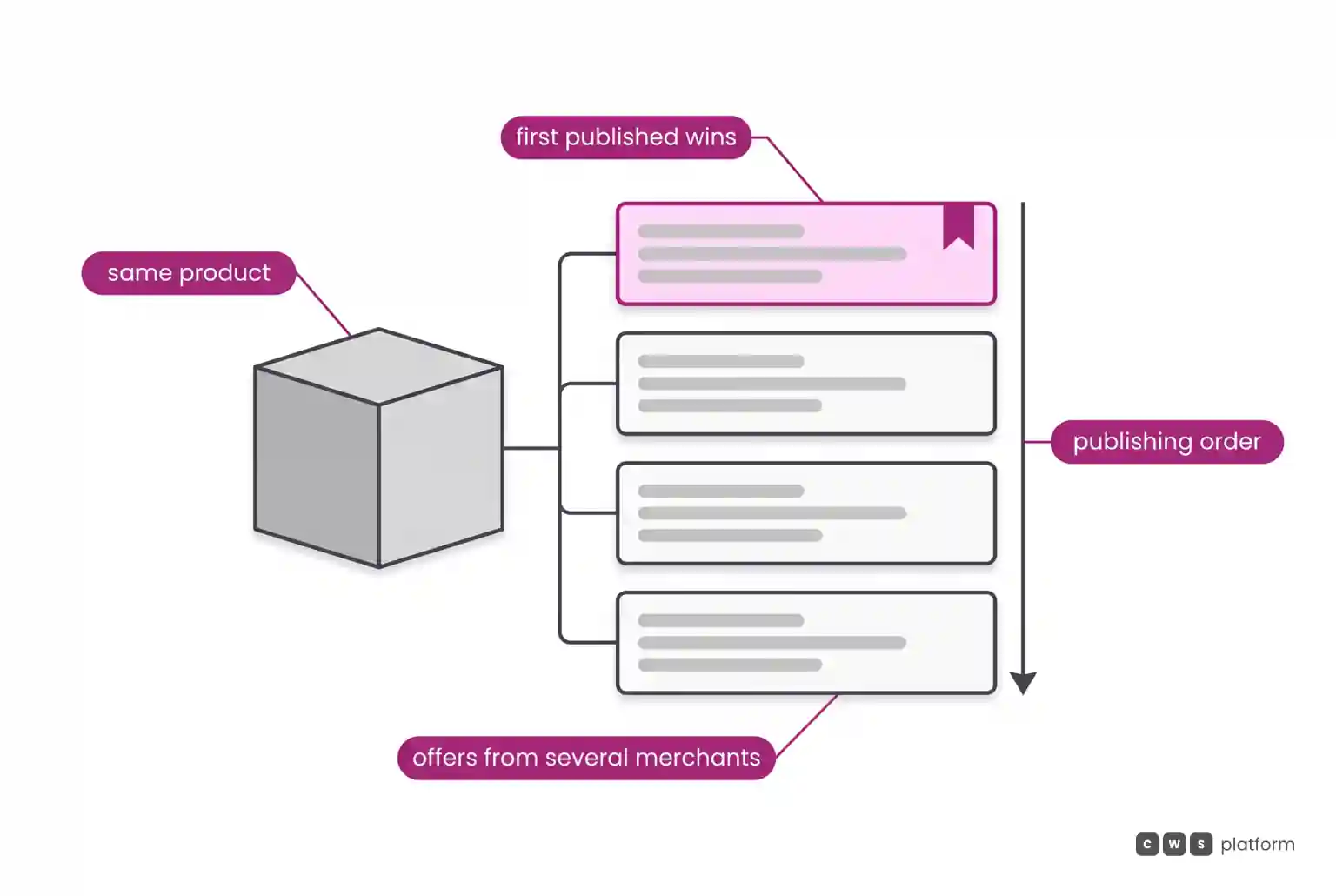
- limitation recorded in the vendor's documentation on September 8, 2026: the marketplace has no built-in buy-box ranking and the default winning offer is the first one published; around 20 million price records is the documented threshold where the out-of-the-box sync pipeline begins to degrade seriously (the same page notes that typical B2B catalogs stay below it) ("no built-in buy-box ranking (the default winner is the first offer published)", "This is the documented threshold where the Spryker out-of-the-box sync pipeline begins to degrade seriously.", https://docs.spryker.com/docs/pbc/all/price-management/latest/base-shop/tutorials-and-howtos/handle-price-explosion-and-erp-owned-pricing-in-b2b.html).
- limitation recorded in the vendor's documentation, accessed on October 16, 2026: merchants cannot create a merchant relation in the Merchant Portal ("Merchants can’t create a merchant relation in the Merchant Portal.", https://docs.spryker.com/docs/pbc/all/merchant-management/latest/marketplace/marketplace-merchant-b2b-contracts-and-contract-requests-feature-overview.html).
The first point decides who wins the sale when offers compete. If the default winning offer is the first one published, a rule that weighs price, terms, inventory, or the relationship with the buyer is not built in and goes into the project scope. For a VP of Sales, that rule is commercial policy: it decides whether the marketplace rewards whoever arrived first or whoever serves that buyer on the terms that buyer values. The price-volume threshold enters the same conversation once the marketplace adds price tables by customer and by merchant.
The second point decides where the contract comes from. If merchants cannot create the relation in their own portal, the initiative stays with the buyer or the operator. For a marketplace seller who prospects actively, the special terms they negotiated offline have to go through a buyer request or the operator before they become a price.
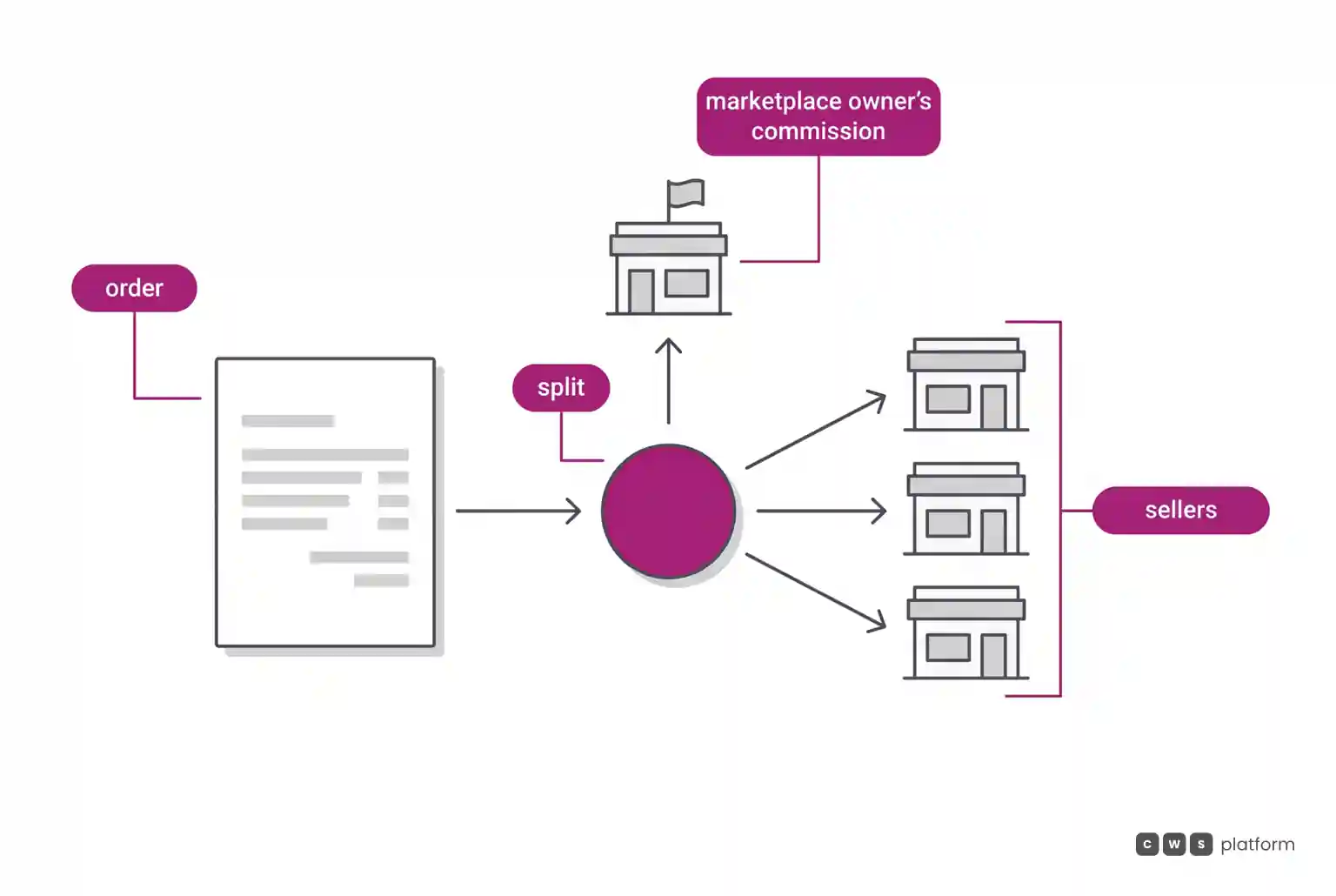
On CWS Platform, price tables, rules, and contracts are configurable on the platform and can come from the ERP or CRM through an API, with commercial policy in parameters of the Commerce Rules Engine (CDL Workspace). In the marketplace, the split percentage is the marketplace owner's commission, and CWS billing is a platform license plus an integration license, with no percentage of sales or GMV.
| decision | Spryker, per the documented mechanism | CWS Platform |
|---|---|---|
| Where pricing rules live | Custom prices set by the merchant in the Merchant Portal for the relation's audience; with no built-in buy-box, the first offer published wins | Price tables, rules, and contracts in parameters of the Commerce Rules Engine (CDL Workspace), configured or received from the ERP and CRM through an API |
| Who opens the commercial relationship | The operator in the Back Office or the buyer through a storefront request; the merchant cannot create the relation in the Merchant Portal | Contracts configurable on the platform or received from the ERP and CRM through an API |
| How many tools the actors use | Operator in the Back Office, merchant in the Merchant Portal, buyer in the storefront | CDL Workspace, a single system for the entire ecosystem |
The channel decision is who will maintain the rule that picks the offer and who opens the contract.
What changes in B2B marketplace operations
A B2B marketplace sells when three relationships work at the same time: the buyer's with the offer, the seller's with the contract, and the marketplace owner's with its own margin.
The first is offer competition. In distribution, the same item shows up in several price tables, with different terms and conditions. The rule that decides which offer the buyer sees first is as commercial as the price table, and it needs an owner in sales.
The second is the contract. Sellers who prospect want to turn a negotiation into recorded terms without depending on someone else. The more steps between the deal and the price on screen, the more orders go back to the phone.
The third is the marketplace owner's margin. The split pays whoever runs the marketplace, and the platform license should not be a percentage of the volume the sellers bring in.
Three questions bring this reasoning into any evaluation: which rule picks the offer when offers compete, and who maintains it; who can open a commercial relationship between seller and buyer; and how the platform cost behaves as marketplace volume grows.
On CWS Platform, thousands of promotions can run at the same time, and payment on terms supports split, scheduled deliveries to multiple addresses and from multiple ship-from locations. A sales rep builds a cart, with the items and the source of each one, and sends the link for the customer to complete the purchase.
When to choose Spryker
Spryker fits scenarios where the operator wants to control contracts starting from the buyer's initiative:
Contracts that start from a buyer request. Choose this architecture when the operator wants every commercial relationship to begin with a formal buyer request, approved by the merchant, as in the Marketplace Merchant B2B Contracts and Contract Requests flow.
Relation pricing managed by the merchant. Choose this architecture when each merchant should maintain the prices of its relations in its own portal, as in Marketplace Merchant Custom Prices.
A technical team for the competition rule. Choose this architecture when the company has a team to design and maintain, in the project, the rule that picks the winning offer.
When CWS Platform is the right choice in this scenario
CWS Platform is the right choice when the marketplace needs commercial rules in parameters and a license with no percentage of seller volume.
The split as the owner's commission. Choose this architecture when the marketplace owner wants to keep the commission. The split percentage is the marketplace owner's commission, and CWS bills a platform license plus an integration license, with no percentage of sales or GMV.
Contracts and prices as configuration. Choose this architecture when commercial policy changes often. Price tables, rules, and contracts are configurable on the platform or received from the ERP and CRM through an API, and the sales rep's discount goes through multi-level approvals.
One system for the whole ecosystem. Choose this architecture when operator, sellers, and buyers need to work in the same system. CDL Workspace is a single system for the entire ecosystem, and customer and sales rep use the same interface.
Multiple sources on the same order. Choose this architecture when a buyer's order combines items from different sources. Payment on terms supports split, scheduled deliveries to multiple addresses and from multiple ship-from locations, and the customer's credit is maintained on the platform.
Where to go from here
If the marketplace depends on how the ERP delivers customer-specific pricing, the comparison of customer-specific pricing in the Spryker and CWS Platform ERP integration looks at the same choice through the technical lens.
Before opening the channel to other sellers, it is worth talking to a CWS Platform specialist to map the offer competition rule and the contract path. The pages When Channels Fight Each Other and When the Catalog Becomes Chaos cover the pains behind this scenario, without talking about any vendor.
Brands mentioned in this article

Trademarks and logos belong to their respective owners. Mention does not imply partnership or endorsement.
"responsive, technically engaged, and willing to work through complex commercial rules (negotiated pricing, credit, customer-specific conditions) rather than pushing generic answers"
Want to see this in your operation?
Real B2B operations already run on it.