← The Cost of Selling Transformation Blockers
When Channels Fight Each Other

B2B marketplace: Spryker or CWS Platform?
A B2B marketplace comparison for the VP of Sales: how Spryker creates the merchant relation between merchant and buyer, what the documentation says about buy-box and the Merchant Portal, next to CWS Platform rules in parameters and split model.
Read →
Assisted selling and agent assist: Spryker or CWS Platform?
An assisted selling comparison for the Director of Commerce: how Spryker Agent Assist acts in the customer's account, which cart the agent can reach, and the PHP 8.3 calendar, next to the shared customer and sales rep order on CWS Platform.
Read →
Assisted selling: commercetools or CWS Platform?
An assisted selling comparison for the Director of Commerce: commercetools lets the rep take over the customer's session, but its limits guide recommends flattening hierarchies and import endpoints remain in beta. On CWS Platform, customer and rep use the same interface.
Read →
OroCommerce vs. CWS Platform: how does sales rep quoting work?
Architecture comparison for the VP of Sales: in OroCommerce, quoting is a single workflow per application and kits sit outside the quick order form; on CWS Platform, negotiation starts from the cart the sales rep builds and sends as a link.
Read →
Optimizely Configured Commerce or CWS Platform: Can You Change Commercial Rules Without a Ticket?
For revenue leaders: what the Optimizely Configured Commerce documentation records about price breaks and quotes, and where CWS Platform keeps commercial rules.
Read →
B2B Ecommerce with Sales Reps: SAP Commerce Cloud vs CWS Platform
Integrating digital portals with existing sales teams requires solid architecture across pricing, credit limits, and assisted sales. Here is how both platforms compare.
Read →
B2B Marketplace with Sellers: SAP Commerce Cloud vs. CWS Platform
Evaluating whether an integrated Mirakl-plus-SAP architecture or a native unified core best resolves B2B multi-seller operational frictions.
Read →
Why Manufacturers Can No Longer Afford Legacy B2B Platforms
Legacy B2B commerce platforms treat industrial distribution like retail storefronts, alienating rep networks and multiplying custom development costs.
Read →
Wholesale Distributor Marketplace: Moving Beyond Third-Party Platforms
Relying on generic platforms erodes margins and buyer relationships. Learn how launching a wholesale distributor marketplace reclaims commercial control.
Read →
Manufacturer Marketplace: How to Launch Without Channel Conflict
Launching a manufacturer marketplace without channel friction requires onboarding dealers as sellers governed by strict territory and routing rules.
Read →
How to Roll Out a B2B Ordering Portal for Distributors Without Creating Channel Conflict
B2B portals stall when catalogs lack customer-specific pricing and terms. Learn how to launch wholesale ordering without triggering sales rep resistance.
Read →
The Pitfalls of Choosing Retail Software for a B2B Marketplace
Adapting B2C retail tools for wholesale commerce leads to channel conflict and fulfillment errors. Discover how true B2B marketplace software protects margins.
Read →
Assisted Sales and Digital Counter: Salesforce or CWS Platform?
Compare Salesforce with CWS Platform for assisted sales and order desk operations, focusing on margin control, branch inventory, and live order building.
Read →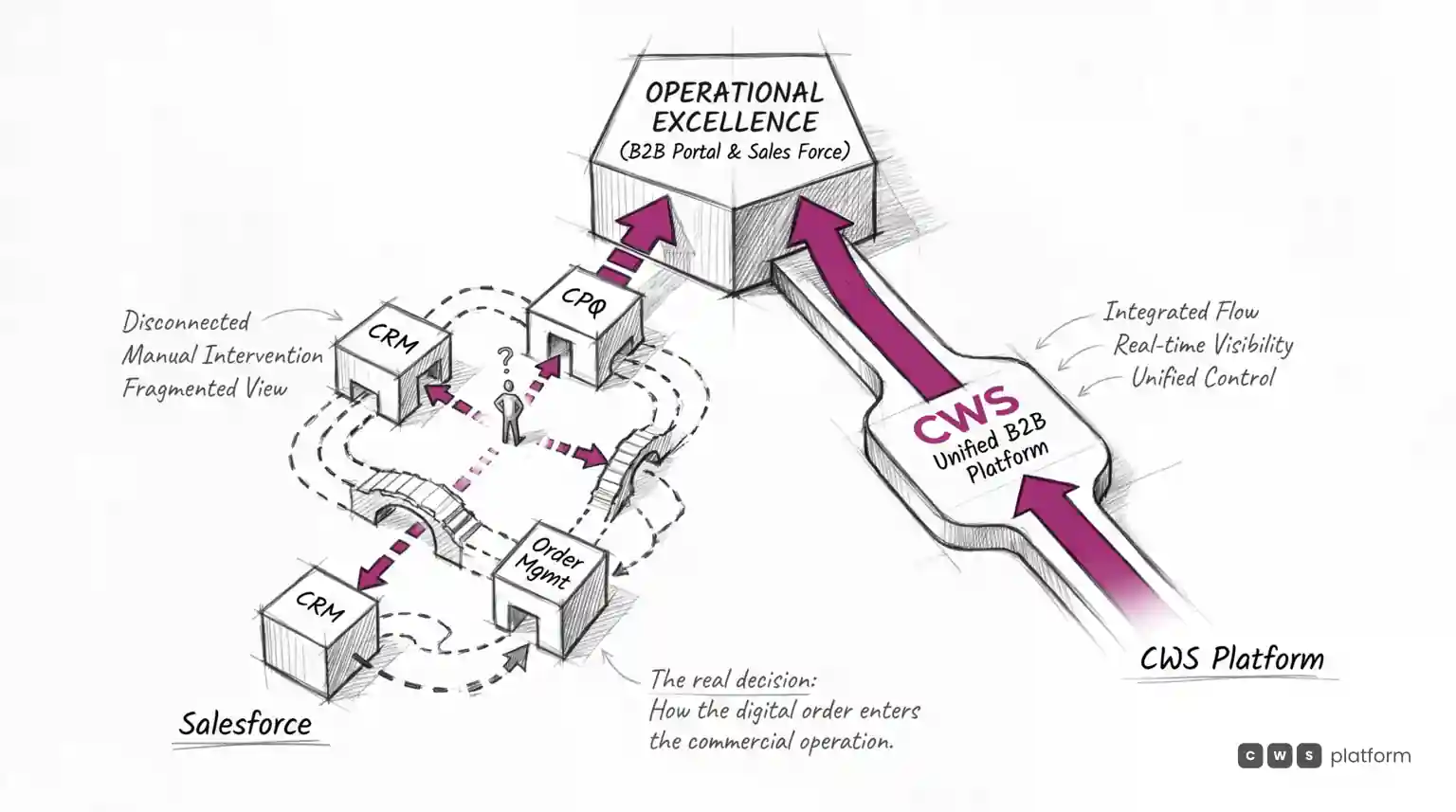
Salesforce vs. CWS Platform: Which Architecture Helps a B2B Portal Sell With Your Sales Team?
This comparison examines how Salesforce and CWS Platform connect a B2B portal to sales operations. The key question is where account context, pricing, approvals, credit, and order governance live.
Read →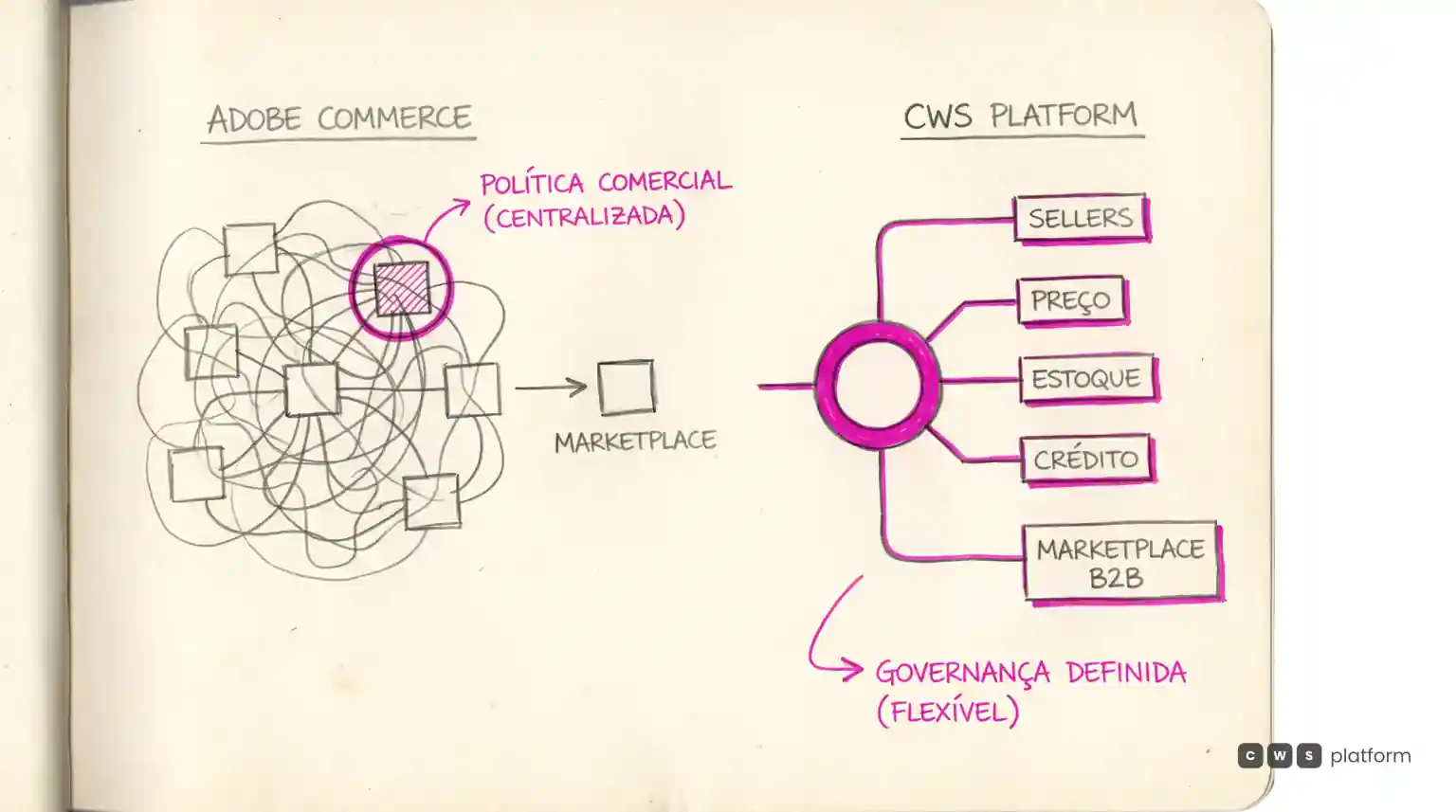
Adobe Commerce vs. CWS Platform: What Architecture Does a B2B Marketplace With Sellers Require?
This comparison examines how Adobe Commerce and CWS Platform structure commercial policy for a B2B marketplace with independent sellers.
Read →
Adobe Commerce vs. CWS Platform: Who Does the CEO Depend On?
Adobe Commerce and CWS Platform create different forms of dependency. The comparison shows whether change sits with engineering, the ecosystem, the vendor, or business operations.
Read →
B2B Portal Meets Counter and Field Sales: Adobe Commerce vs. CWS Platform, Side by Side
A head-to-head architecture comparison for distribution leaders who own marketing and channel revenue: Adobe Commerce's assigned pricing via shared catalogs versus CWS Platform's pricing calculated at the moment of sale. Including the four scenarios where Adobe Commerce is the right call.
Read →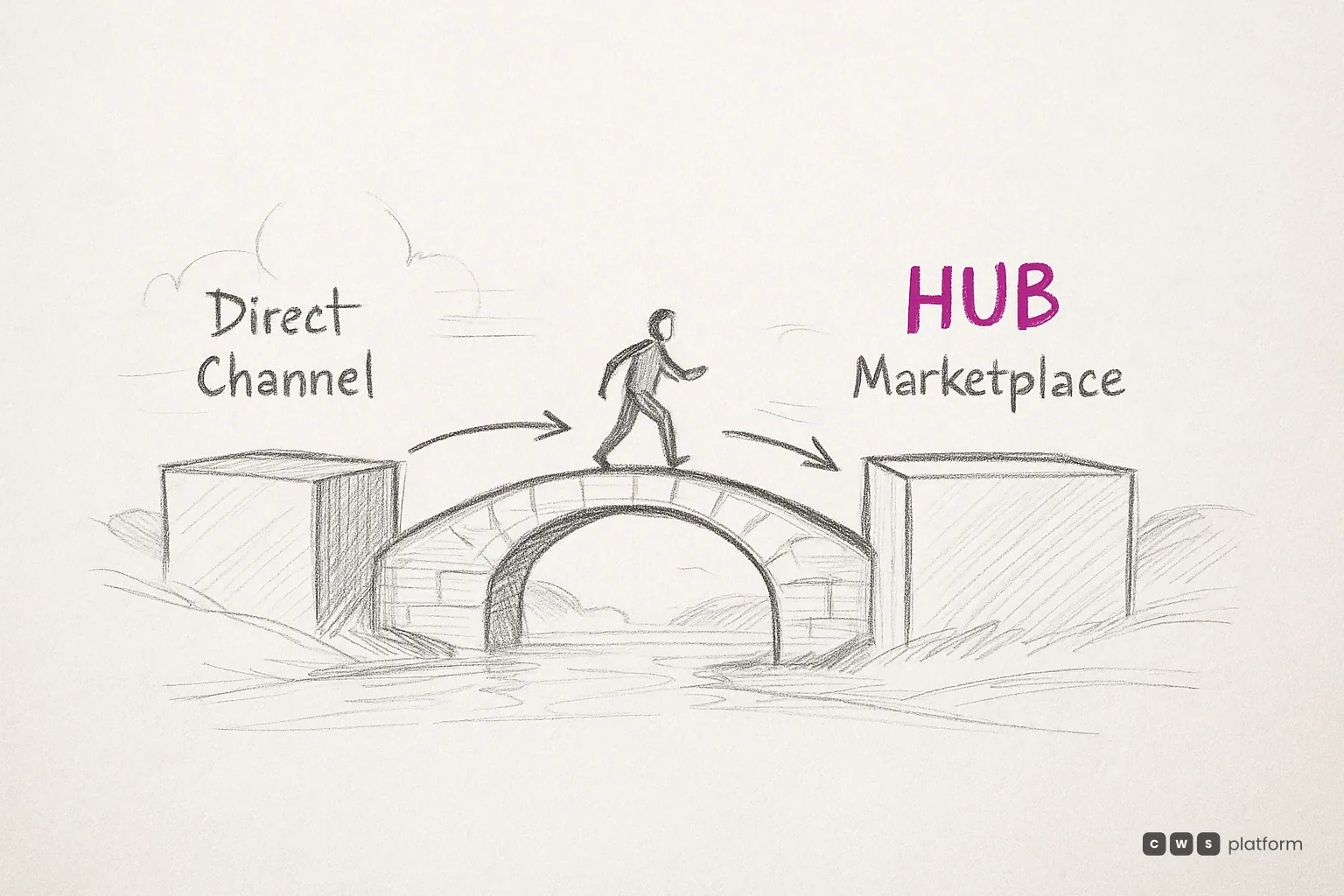
Third-Party Marketplaces as a B2B Demand Channel
Treating Amazon Business or similar marketplaces as the enemy is the wrong move. The strategy that works is using them as a top-of-funnel entry point while building margin on your own channel — but only with price governance and differentiated terms by channel.
Read →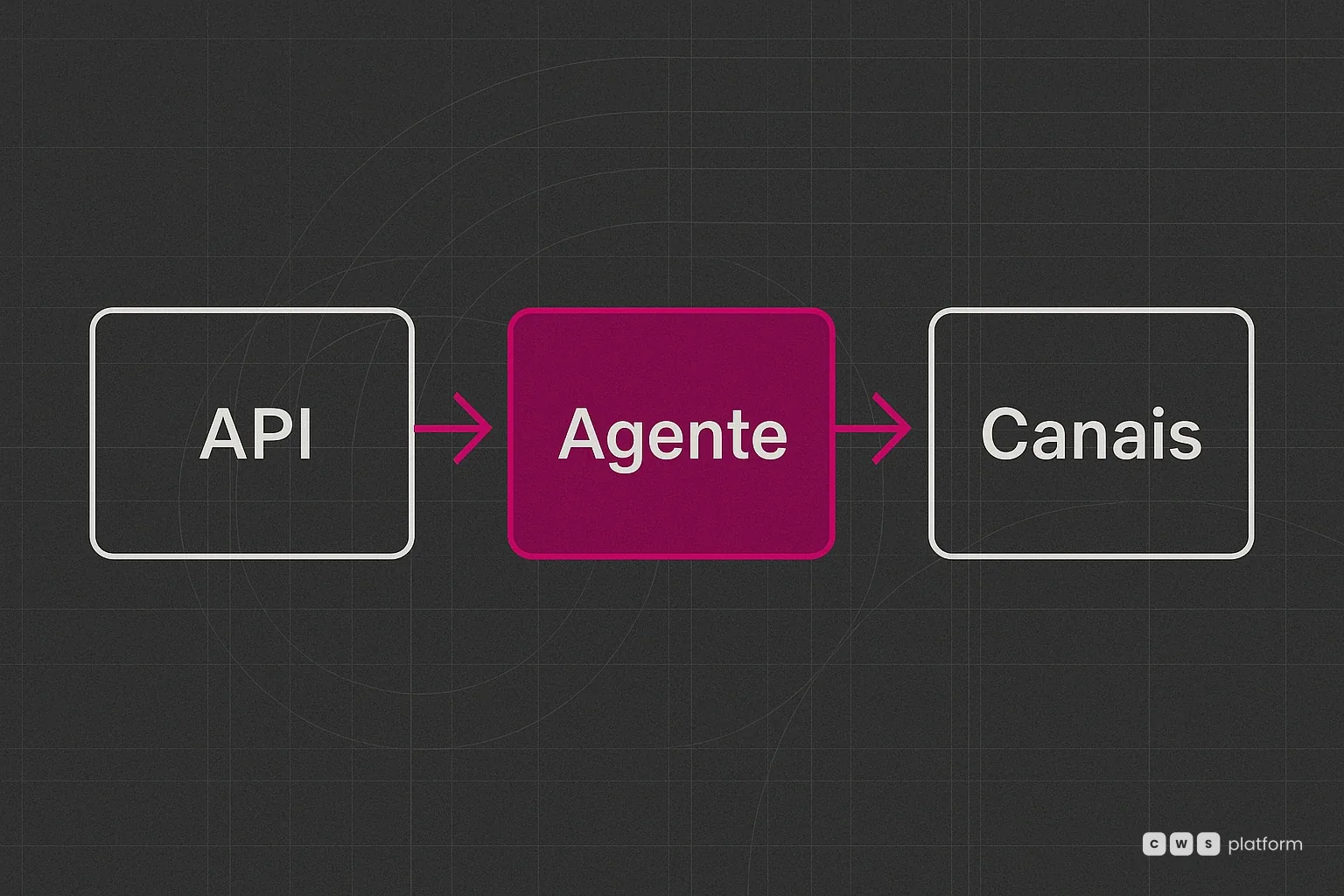
Your AI Agent Will Cut the Same Side Deals Your Sales Reps Already Do
Deploying an AI agent on your B2B portal without first formalizing commercial rules doesn't fix channel conflict — it scales the same off-policy deals your reps already cut, now at volume and without an audit trail.
Read →
Your B2B Portal Is Live. The Governance It Needs to Actually Work Isn't.
Most distributors have digitized the storefront. Few have digitized the decision — and that's where the risk, the margin, and the data that matter actually live.
Read →
When the Manufacturer and the Channel Fight Over the Same Customer
The end customer calls the manufacturer directly, ready to buy — and selling to them is the trap that breaks the channel that built the business. With MTE-Thomson's operation, when going direct destroys more than it captures.
Read →
How an industry built a direct channel that protects its distribution
An industry's official online store that connects technical support and a brand-curated catalog to sales through distributors and retailers, guiding customers to the right part and the right partner.
Read →