OroCommerce vs. CWS Platform: what happens to order operations after checkout?
Orders that arrive from other channels, backup and continuity, split shipments and multiple origins: the order's daily life through the lens of whoever runs operations.

Editorial note: an architecture comparison between OroCommerce and CWS Platform, written for those who answer as COO. Every fact about OroCommerce comes from its public documentation, with the address next to it.
For whoever runs operations, an order does not end when the buyer clicks. That is where it starts. After checkout come the questions that never show up in a demo: what happens to orders that arrive through other channels, how order history leaves the platform if it ever has to, what comes back first when an environment goes down, and how a single order turns into three shipments, from two warehouses, to different addresses.
A distribution operation lives on those questions. Every order that has to be rekeyed, checked by hand, or rebuilt after an outage is transaction cost that never shows up in the license, but does show up in payroll and in delivery times.
This comparison looks at OroCommerce and CWS Platform from that angle only: the day-to-day life of the order after the click. It is not a feature ranking. For the license and ERP integration math, the earlier comparison, what goes into the bill when the digital channel grows, covers the topic through the CFO lens.
What OroCommerce does well
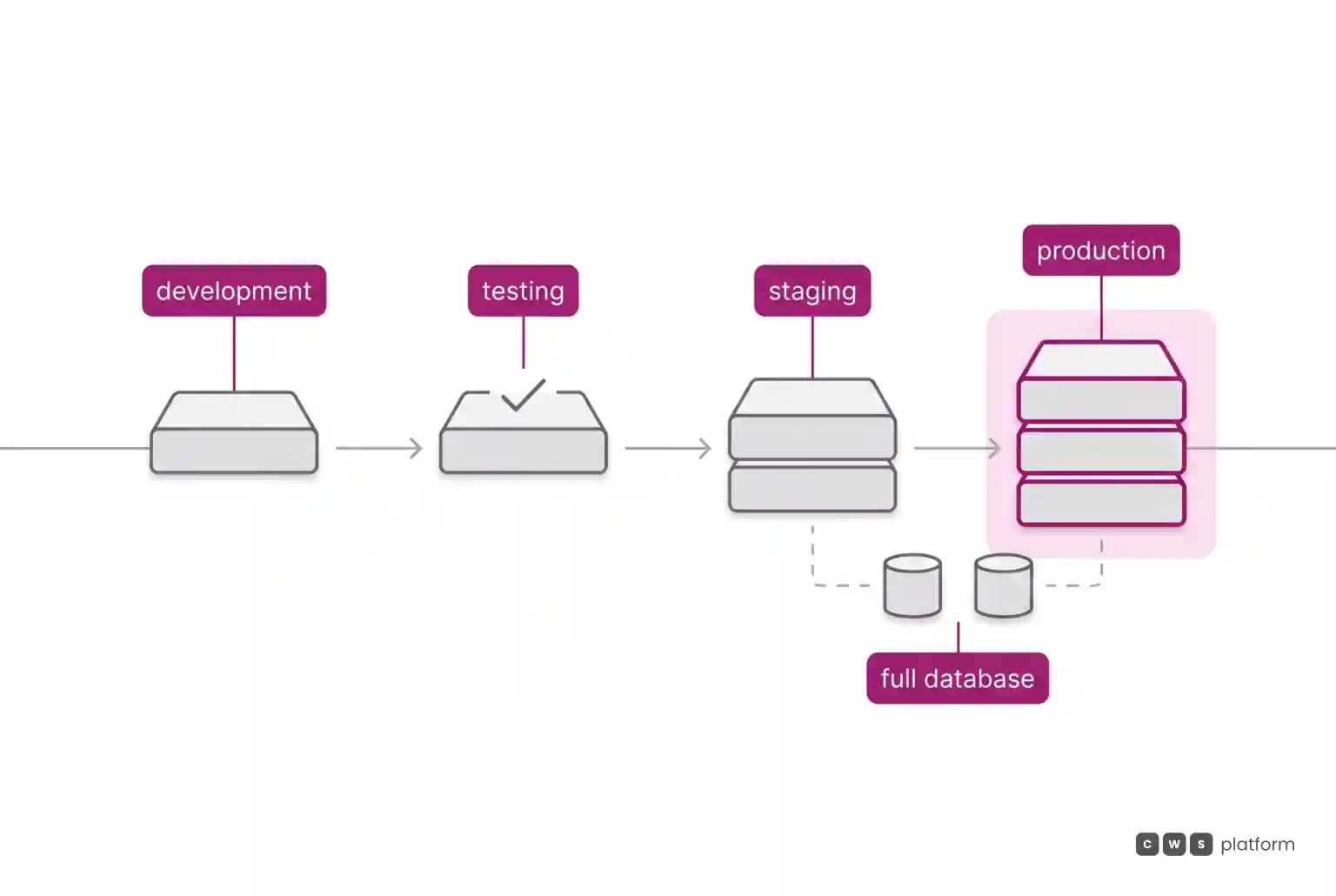
OroCommerce gives operations a choice about where the platform runs. According to the infrastructure documentation, it can be deployed on OroCloud, in a public cloud, in a private cloud, or in the customer's own environment, and the lifecycle includes four environment types: development, testing or UAT, staging, and production, the last two with the full database.
Upgrades come in different modes depending on risk. The guide on how to run upgrades describes the standard mode, with maintenance mode on; the rolling upgrade, which keeps the application running and is safe only when the database structure does not change; and the source upgrade, for a quick code update.
For volume, the Batch API creates or updates lists of entities of the same type in a single request; the action is disabled by default, and synchronous requests that run past 25 seconds continue asynchronously. Recurring orders, in the Enterprise edition, generate orders on scheduled dates from a previous order. And the edition comparison lists asynchronous processing with RabbitMQ, search with Elasticsearch, and multi-warehouse inventory in the Enterprise edition.
Where the architecture diverges
The divergence that matters to operations sits in two lines of the vendor's documentation, one about continuity and one about getting data out:
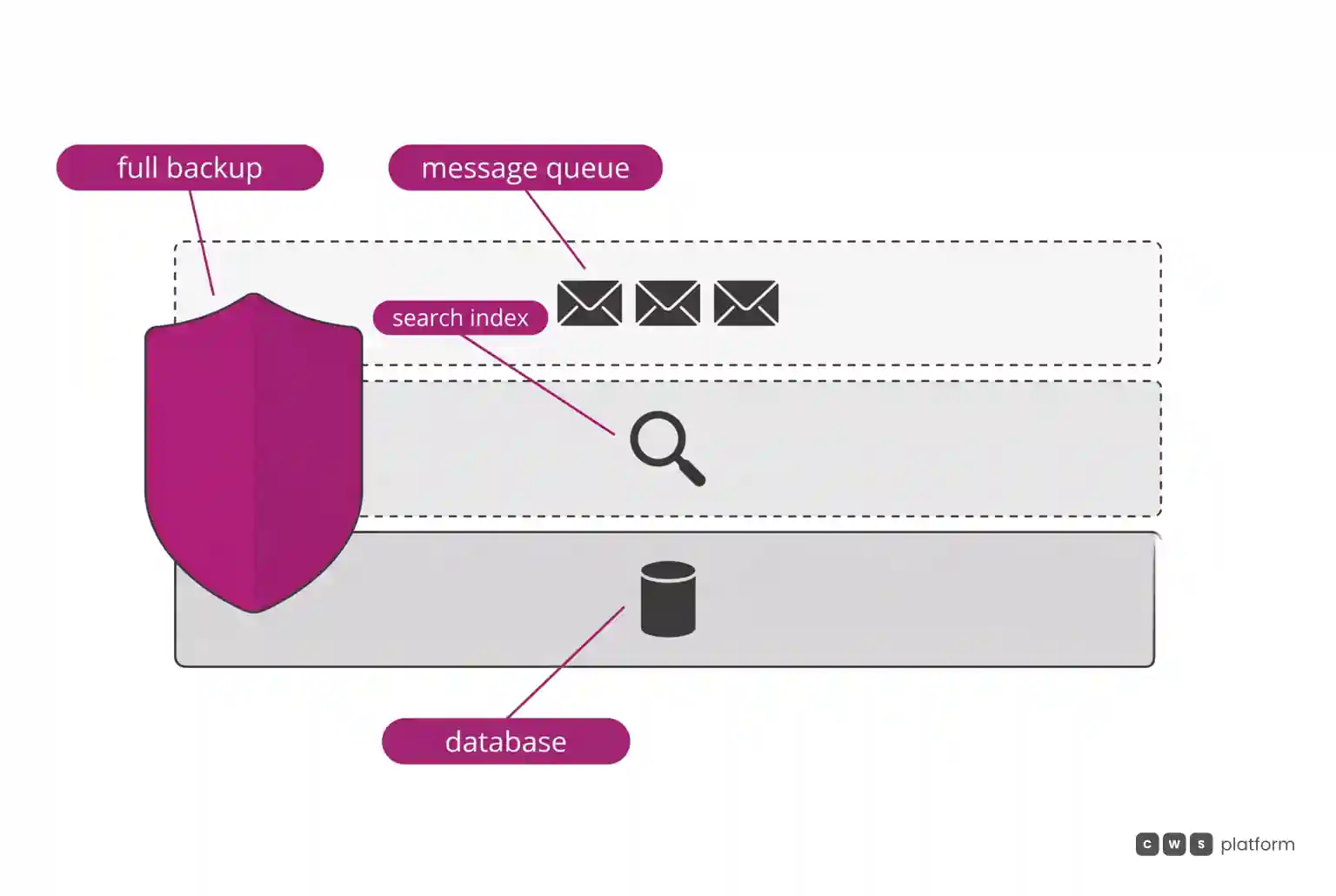
- limitation recorded in the vendor's documentation, accessed on October 16, 2026: the full OroCloud backup does not cover Elasticsearch and RabbitMQ ("However, it does not cover Elasticsearch and RabbitMQ.", https://doc.oroinc.com/cloud/maintenance/faq/).
- limitation recorded in the vendor's documentation, accessed on October 16, 2026: external order import does not allow exporting legacy order data ("Export of legacy order data is not available.", https://doc.oroinc.com/user/back-office/sales/orders/external-orders-import/).
The first belongs in the business continuity plan. Elasticsearch is the search and RabbitMQ is the asynchronous processing queue; when the full backup does not cover them, the recovery plan has to say how those two components come back and who is responsible. The second belongs in channel design: orders from outside come in through the import, and that path does not send legacy history back out. If the history ever needs to leave, it is worth asking the vendor, before the migration, what the path is.
Both are operations questions, not technology questions, and they weigh more when they are answered after go-live.
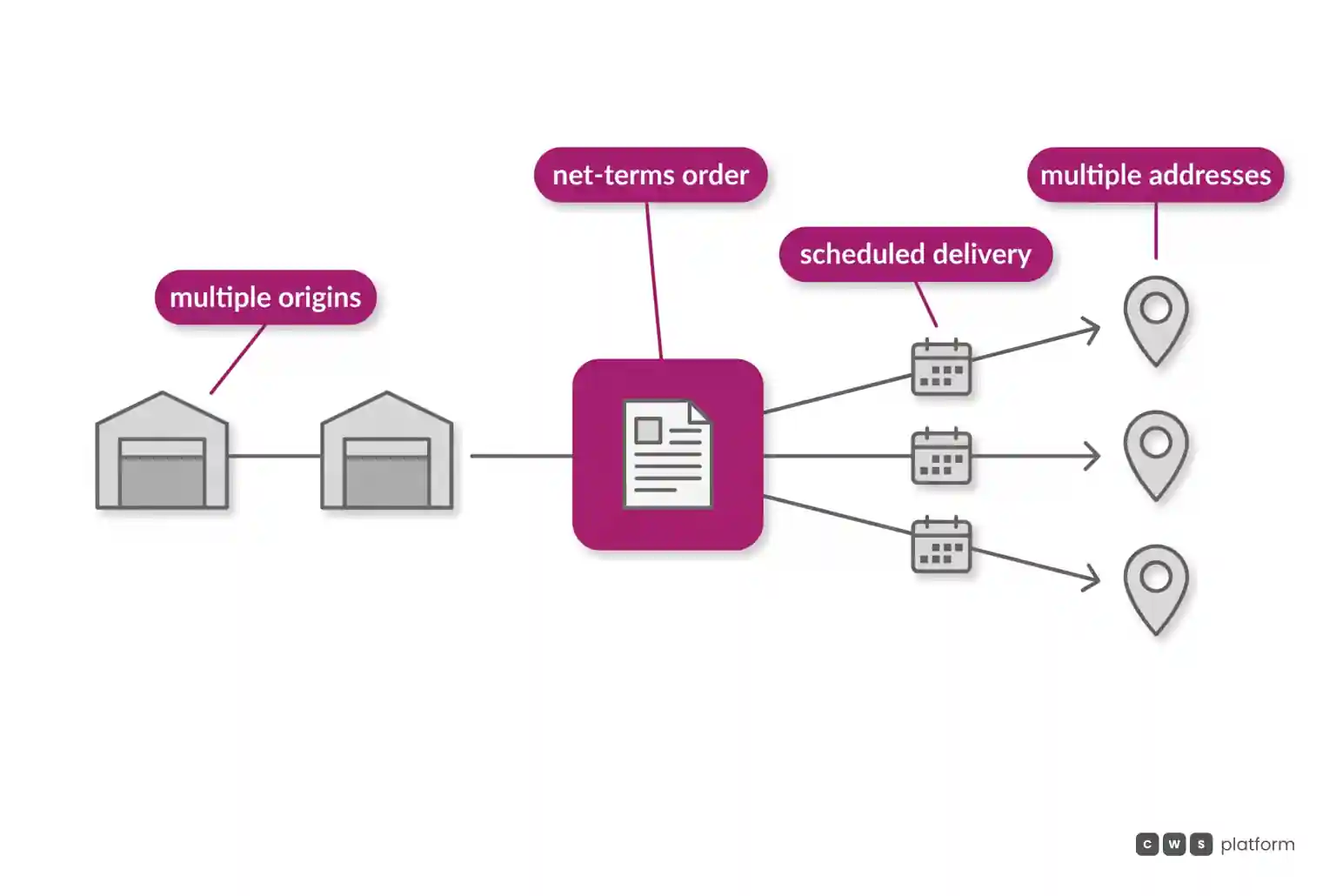
On CWS Platform, the order talks to other systems through APIs. CWS is API-first, with REST APIs and webhooks for ERP, CRM, tax, and payments, and tax comes from the ERP or from the tax engine the customer already uses. Net terms work with split shipments, scheduled deliveries, multiple ship-to addresses, and multiple ship-from locations. And all customers run the same version of the platform.
| decision | OroCommerce, per the documented mechanism | CWS Platform |
|---|---|---|
| Where the platform runs and how it upgrades | OroCloud, public or private cloud, or the customer's environment; standard, rolling, or source upgrade | All customers on the same version of the platform |
| How orders from other channels come in and go out | External order import, with no export of legacy history; Batch API disabled by default | REST APIs and webhooks for ERP, CRM, tax, and payments |
| What the full backup covers | On OroCloud, Elasticsearch and RabbitMQ are left out | A question for any vendor's contract, with the recovery plan in writing |
| How one order becomes several shipments | Multi-warehouse inventory in the Enterprise edition | Net terms with split shipments, scheduled deliveries, multiple ship-to addresses, and multiple ship-from locations |
The operational decision is knowing, before signing, where the order comes in, where it goes out, and what comes back first when something goes down.
What changes in operations, through the COO lens
For operations, the difference shows up in three routines.
The first is intake for orders that are not born in the storefront. Field reps, inside sales, a large customer's EDI feed, and the ERP itself all create orders outside the portal. When part of them come in through an import, it is worth knowing whether the path is one-way, because history that does not leave by the same path turns into separate reconciliation. On CWS, customer and sales rep use the same interface: the rep builds the cart with the items and the ship-from location of each one and sends the link for the customer to close. The order records who built the cart and who chose the payment.
The second is fulfillment. A distributor's order rarely ships complete from a single place. On CWS, a net-terms order accepts split and scheduled shipments, to multiple ship-to addresses and from multiple ship-from locations, and the same order accepts more than one payment method.
The third is continuity. For any vendor, three questions are worth the meeting: which components the full backup covers and which are left out; what the documented route is to get order history out of the platform; and who runs version upgrades, with what window and in which mode. On CWS, the last one has a short answer: all customers run the same version. The first two deserve a written answer in the contract, from any vendor.
When to choose OroCommerce
OroCommerce fits scenarios with these characteristics:
An operation that needs to choose where the platform runs. Choose this architecture when the company wants to decide between managed cloud, its own cloud, or a local environment, as the infrastructure documentation describes.
A technical team that runs its own upgrades. Choose this architecture when there is a team to choose, for each release, between a maintenance-mode, rolling, or source upgrade, per the upgrade guide.
Scheduled reorders as part of the customer's routine. Choose this architecture when a good share of volume is orders that repeat on fixed dates, as the Enterprise edition's recurring orders handle.
When CWS Platform is the right choice in this scenario
CWS Platform is the right choice when operations wants the order to talk to other systems through APIs and wants split fulfillment to be part of the order.
An order that comes in and goes out through APIs. Choose this architecture when ERP, CRM, tax, and payments need to talk to the order. CWS is API-first, with REST APIs and webhooks, and tax comes from the ERP or from the tax engine the company already uses.
One order, several shipments. Choose this architecture when the same order ships from several warehouses to several addresses. Net terms work with split shipments, scheduled deliveries, multiple ship-to addresses, and multiple ship-from locations.
Assisted orders and self-service in the same place. Choose this architecture when inside sales and field reps need to enter orders without creating a second circuit. The rep builds the cart and sends the link, and the order records who built it and who chose the payment.
One version for every customer. Choose this architecture when operations does not want to plan an upgrade window per customer. All customers run the same version.
Where to go from here
If the question is still which platform model fits your operation, before any vendor, the starting point is the three B2B commerce platform models.
If the decision depends on how orders arrive in and leave your operation today, it is worth talking to a CWS Platform specialist and mapping, with your own channels and warehouses, the path of each order. The page When Integration Breaks Everything covers the pain behind this scenario in depth, without talking about any vendor.
"responsive, technically engaged, and willing to work through complex commercial rules (negotiated pricing, credit, customer-specific conditions) rather than pushing generic answers"
Want to see this in your operation?
Real B2B operations already run on it.